Wednesday, October 12, 2022

THE “SHARED HOUSEHOLD”: RIGHT OF RESIDENCE OF WOMEN IN “ESTRANGED” RELATIONSHIP


THE “SHARED HOUSEHOLD”: RIGHT OF RESIDENCE OF WOMEN IN “ESTRANGED” RELATIONSHIP


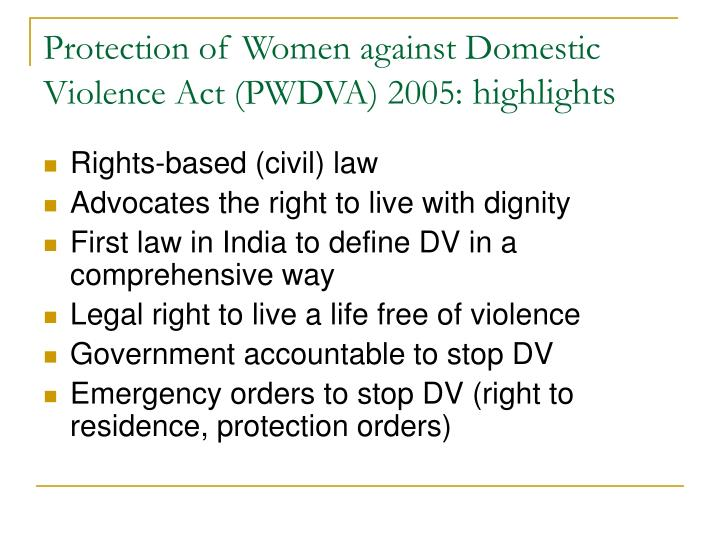
The Protection of Women from Domestic Violence Act, 2005 ( In short DV Act) was enacted with a view to provide safety valve to a women in distress in a matrimonial relationship and for such additional reliefs as may have been necessary for ensuring a dignified life to a woman in such a relationship.  The outlet of safety and security of women is therefore the hallmark of the legislation. The DV Act over the space of time has withstood the test of time, though, some grey area in the provisions of DV Act have also surfaced in due course and dockets of judicial authorities remained flooded with the said aspect. The Right to residence in shared household had remained a bone of contention. Of course, what is a shared household is defined in the Act, but the definition was tested by judicial dicta and now the issue appears to have been settled.

The evolution in law as regards right to residence of a woman in a shared household shall be deliberated herein.      

Shared Household:

Section 17 of the Domestic Violence Act reads as follows:-

"17. Right to reside in a shared household.-(1) Notwithstanding anything contained in any other law for the time being in force, every woman in a domestic relationship shall have the right to reside in the shared household, whether or not she has any right, title or beneficial interest in the same. (2) The aggrieved person shall not be evicted or excluded from the shared household or any part of it by the respondent save in accordance with the procedure established by law."

Section (s)  of DV Act defines "shared household" means a household where the person aggrieved lives or at any stage has lived in a domestic relationship either singly or along with the respondent and includes such a household whether owned or tenanted either jointly by the aggrieved person and the respondent, or owned or tenanted by either of them in respect of which either the aggrieved person or the respondent or both jointly or singly have any right, title, interest or equity and includes such a household which may belong to the joint family of which the respondent is a member, irrespective of whether the respondent or the aggrieved person has any right, title or interest in the shared household.

What emanates from the above, thus, is that if the property is not owned or tenanted by the husband, nor belonged to joint family property, it does not fall within the ambit of section 2 (s) of DV Act. It may be worthwhile to analyze judgments rendered in this regard to trace the evolution in law. 


                                                     LAW

(i)           Shumita Didi Sandhu Vs Sanjay Singh Sandhu & Ors 174 (2010) DLT 79

The Delhi High Court had to deal with a question for prima facie consideration in the case was as to whether the wife has any right to stay in the suit property in which her husband has no right, interest or share and belongs to her Father-In-Law and/or Mother-In-Law. Incidental question for determination was as to whether it could be treated as matrimonial home of the wife?

In para 18 of the Shumita Didi (Supra) it is held :

“Legal position which emerges is that the husband has legal and moral obligation to provide residence to his wife. Therefore, wife can claim right of residence against her husband. If the house in question where she lived after marriage belongs to her husband, it would certainly be treated as matrimonial home. Likewise, if the house in question belongs to HUF in which her husband is a coparcener, even that can be termed as matrimonial house. However, where the house belongs to parents-in-law in which husband has no right, title or interest and they had allowed their son along with daughter-in-law to stay in the said house, it would be a permissive possession by the daughter-in-law but would not give any right to her to stay in the said house. What would be the position if there is no dispute between the husband and wife but the parents of the husband do not want their son and son's wife to stay in the said house for certain reasons. Obviously, their son, who is only a permissive licensee and staying in the house with his wife cannot claim legal right therein. If son cannot claim any such right against his parents to stay in a house which belongs to his parents, his wife obviously would also have no case to claim such a right…”.

(ii)           SR Batra & Anr vs Taruna Batra 136 (2007) DLT 1 SC

The above is another milestone judgment about the same time, wherein the Supreme Court had reversed the judgment of Delhi High Court while dismissing the injunction application of the daughter-in-law.

It was thus emerged that:

(i)           The house in question belonging to the Mother-in-Law and did not belong to her husband and no rights of residence could be claimed in the said house.

(ii)          The 'Shared household' within the meaning of Section 2 (s) of the Protection of Women from Domestic Violence Act, 2005 cannot be stretched to include a household where the person aggrieved lives or at any stage had lived in a domestic relationship. Mere living in the property in question in the past, cannot be construed as shared household.

In para 26 of S R Batra (Supra) It is observed that:

“If the mere residence of a women should be treated as shared household is accepted, then it will mean that wherever the husband and wife lived together in the past that property becomes a shared household. It is quite possible that the husband and wife may have lived together in dozens of places e.g. with the husband's father, husband's paternal grandparents, his maternal parents, uncles, aunts, brothers, sisters, nephews, nieces etc. If the interpretation canvassed by the learned Counsel for the respondent is accepted, all these houses of the husband's relatives will be shared households and the wife can well insist in living in the all these houses of her husband's relatives merely because she had stayed with her husband for some time in those houses in the past. Such a view would lead to chaos and would be absurd”.

Section 19(1) (f) of the DV Act prescribes need of an alternative accommodation. However, it is held that the claim for alternative accommodation could only be made against the husband and not against the parents- in-laws or other relatives.

(iii)  Savitri Devi Vs Manoj Kr & Anr III (2013) DMC 689

The Delhi High Court in the above captioned case has held that if property neither belonged to husband nor is taken on rent by him nor is a joint family property of which husband is a member. The said property cannot be regarded as a "shared house hold" as defined under Section 2 (s) of The Domestic Violence Act.

(iv)       In Neetu Mittal vs. Kanta Mittal 2009 AIR (Del) 72, The Delhi High Court has held that :-

A woman can assert her rights, if any, against the property of her husband, but she cannot thrust herself against the parents of her husband, nor can claim a right to live in the house of parents of her husband, against their consult and wishes.

(v)         Preeti Satija Vs. Raj Kumari and Anr., 2014 SCC Online Del 188.

In paragraph 21, the Division Bench of Delhi High Court has laid down following:-

21.  The other aspect, which this Court wishes to highlight, is that the 2005 Act applies to all communities, and was enacted “to provide more effective protection of the rights of women guaranteed under the Constitution who are victims of violence of any kind occurring within the family”. The right to residence and creation of mechanism to enforce is a ground breaking measure, which Courts should be alive to. Restricting the scope of the remedies, including in respect of the right to reside in shared household, would undermine the purpose of this enactment. It is, therefore, contrary to the scheme and the objects of the Act, as also the unambiguous text of Section 2 (s), to restrict the application of the 2005 Act to only such cases where the husband alone owns some property or has a share in it. Crucially, the mother-in- law (or a father-in-law, or for that matter, “a relative of the husband”) can also be a Respondent in the proceedings under the 2005 Act and remedies available under the same Act would necessarily need to be enforced against them.”

(vi)         Navneet Arora Vs. Surender Kaur and Ors., 2014 SCC Online Del 7617

The Division Bench of Delhi High Court had considered the various aspects of Act, 2005. Dealing with right of residence in paragraphs 58 following was held:-

“58. It may be highlighted that the Act does not confer any title or proprietary rights in favour of the aggrieved person as misunderstood by most, but merely secures a ‘right of residence’ in the ‘shared household’. Section 17 (2) clarifies that the aggrieved person may be evicted from the ‘shared household’ but only in accordance with the procedure established by law. The legislature has taken care to calibrate and balance the interests of the family members of the respondent and mitigated the rigour by expressly providing under the proviso to Section 19(1) that whilst adjudicating an application preferred by the aggrieved person it would not be open to the Court to pass directions for removing a female member of the respondents family from the “shared household”. Furthermore, in terms of Section 19 (1)(f), the Court may direct the respondent to secure same level of accommodation for the aggrieved person as enjoyed by her in the “shared household” or to pay rent for the same, if the circumstances so require.

(vii)     In Barun Kumar Nahar vs. Parul Nahar 2013 (2) AD (Delhi) 517, Delhi High Court has held thus:

A daughter-in-law has no right to reside in the subject property which belongs to her father-in-law as the said property is not covered by the definition of ‘shared household’, the same being neither a joint family property in which her husband is a member, nor it belongs to her husband and is not even a rented accommodation owned by the husband.

(vii) Harish Chand Tandon Vs Darpan Tandon & Ors 2015 (153) DRJ 273

 The Delhi High Court has held that a Son or daughter-in-law shall only be a  "gratuitous licensees in the property of their parents/Parents-in-laws". An adult son or daughter or for that matter daughter- in-law has no legal right to occupy the self acquired property of the parents or parents-in-law, as the case may be, against their consent and wishes.

(ix)  Jotsna Vs Lakhpat Rai 235 (2016) DLT 633

The Delhi High Court has held that the father-in-law cannot be compelled to remain under constant threat of false implication and face humiliation at the hands of his daughter-in-law and grandson. The parents in such a case when their life has been made miserable by their daughter-in-law can always ask such son, daughter-in-law or grandson to leave the house and lead their life so that the parents can live in peace. Thus, right of residence cannot be claimed in the property of father-in-law. 

(x) Manju Gupta Vs Pankaj Gupta 2018 SCC OnLine Del 11337

The Delhi High Court has held that if daughter-in-law was permitted to use a portion of the property, then, it is clear that what was allowed was only a permissive user. The petitioner cannot force herself on the owner of the property, particularly when she has no vested or legal right to claim residence in his property.

(xi)     Aarti Kumari Vs Rakesh Kumar Chhabra & Anr  264 (2019) DLT 617

The Delhi High Court in view of the verdict of the Hon'ble Supreme Court in "S.R. Batra & Anr. Vs. Taruna Batra" (2007) 3 SCC 169,  "Manju Gupta Vs. Pankaj Gupta" 2018 SCC OnLine Del 11337, "Jotsna Vs. Lakhpat Rai" 2016 SCC OnLine Del 6205, "Harish Chand Tandon Vs. Darpan Tandon and Ors." 2015(153) DRJ 273 &  "Sudha Mishra s. Surya Chandra Mishra" 2015(2)Crimes182(Del.) has held that if the premises were neither owned nor tenanted by the husband of the aggrieved  wife nor did the premises belong to the joint family comprising the other members, thus, does not fall within the ambit of Section 2 (s) of the Protection of Women from the Domestic Violence Act, 2005.

The aforesaid judgments have categorically laid down the principles based on Section 2 (s) & Section 17 of the DV Act that aggrieved woman shall have right to residence in the property where she lived or had been living, provided the same belonged to her husband or her husband had indefeasible interest in the said property and not otherwise.

The hon’ble Supreme Court in a recent judgment however has redefined the scope and ambit of section 2(s) & section 17 of DV Act in a judgment rendered as Satish Chandra Ahuja Vs Sneha Ahuja (CIVIL APPEAL NO.2483 of 2020) and the same has also taken note of ambit of civil court in such matters where the issues of right to residence or such allied issues are pending before a court of Magistrate.

The hon’ble Supreme Court has redefined the meaning of shared household and has also recorded a finding that judgment rendered by the Supreme Court earlier reported as S.R. Batra and Anr. Vs. Taruna Batra, (2007) 3 SCC 169 as regards interpretation of section 2(s) was not a correct law. Firstly, it is held that the definition of shared household under Section 2(s) is very comprehensive and no restrictive meanings could be given to it. What may constitute a shared household is that the aggrieved person lives or has lived in the household and the aggrieved person had been in a domestic relationship and the property is a joint family and the husband is a part of the joint family. Moreover, it is also pointed out that in SR Batra (Supra), the estranged wife was not residing in the premises in question. What weighed in the mind of hon’ble Supreme Court is that a woman cannot be denied the right of residence, only on the premise that on the date of filing of application, she did not reside at the suit property, while it is laid down that the protection under Section 19 of DV Act is indefeasible and shall be available to a woman in all the cases, irrespective of the nature of proceedings. The Court also cannot be oblivious to the need of the senior citizens as they are entitled to a peaceful life. The contention of a woman about her right of residence and issue of shared household should be duly considered.

In Satish Chandra Ahuja  (Supra) in para no. 157 the Supreme Court has held as under:

(i) The pendency of proceedings under Act, 2005 or any order interim or final passed under D.V. Act under Section 19 regarding right of residence is not an embargo for initiating or continuing any civil proceedings, which relate to the subject matter of order interim or final passed in proceedings under DV Act, 2005.

(ii) The judgment or order of criminal court granting an interim or final relief under Section 19 of D.V. Act, 2005 are relevant within the meaning of Section 43 of the Evidence Act and can be referred to and looked into by the civil court.

(iii) A civil court is to determine the issues in civil proceedings on the basis of evidence, which has been led by the parties before the civil court.

(iv) In the facts of the present case, suit filed in civil court for mandatory and permanent injunction was fully maintainable and the issues raised by the appellant as well as by the defendant claiming a right under Section 19 were to be addressed and decided on the basis of evidence, which is led by the parties in the suit.

CONCLUSION

The Protection of Women from Domestic Violence Act, 2005 is enacted with a view to provide a shielding umbrella to women who may be facing onslaught in domestic relationship. The law has evolved ever since on multiple aspects including on the issue of right to residence in shared household. The judgment of apex court reported as SR Batra & Anr vs Taruna Batra 136 (2007) DLT 1 SC held the field over the years, however, recently the Supreme Court has held that the SR Batra (Supra) does not lay down correct proposition in law and it is held in Satish Ahuja (Supra) that no restrictive meaning could be given to shared household under Section 2(s) of the Act. It is not without reason that principle of Section 17 (1) & (2) of the DV Act lays down that irrespective of any contrary provisions in any other law, every women in a domestic relationship shall have the right to reside in the shared household and the aggrieved person shall not be evicted or excluded from the shared household by the respondent except in accordance with the procedure established by law. No doubt, the property owned by the father-in-law or Mother-in-law of a woman, where her husband has no alienable rights, title or interest, the right to residence cannot be claimed in it. Moreover, possession as licensee and permissive possession ipso fact shall not confer any right on a woman. The rights could also be availed of by aggrieved persons in civil courts, as there is no embargo that effect and the Mother-in-Law or father-in-law or any aggrieved party with a view to seek injunction against right to residence etc under DV Act may approach civil court.

                                           ----------

Anil K Khaware

Founder & Senior Associate

Societylawandjustice.com  


Thursday, September 1, 2022

SETTING ASIDE OF ARBITRAL AWARD ON THE GROUND OF PATENT ILLEGALITY


Setting aside of Arbitral award on the ground of patent illegality

Delhi High Court has settled the legality of Antrix-- Devas Deal

The petition bearing no. OMP (Comm) 11 of 2011 captioned as Antrix Corporation Ltd Vs Devas Multimedia Pvt Ltd, under Section 34 of the Arbitration and Conciliation Act, 1996 (hereinafter referred to as the Act) Antrix Corporation Ltd ( In short “Antrix”) had prayed for setting aside of the Arbitral award dated 14.09.2015 passed by the Arbitral Tribunal constituted by the International Chamber of Commerce allowing the claim of the Respondent – Devas Multimedia Private Limited (In short “Devas”). The Delhi High Court was pleased to set aside the arbitral award on the ground of patent illegality and against public policy of India.

The gravamen of the case is that Antrix sought winding up of Devas under Section 271(c) read with Section 272(1)(e) of the Companies Act, 2013 before the National Company Law Tribunal (In short “NCLT) alleging that Devas was formed for a fraudulent and unlawful purpose and its affairs had been conducted in a fraudulent manner. A Provisional Liquidator was appointed by the NCLT on 19.01.2021, and by final order dated 25.05.2021 NCLT allowed winding up of “Devas”. The appeal was preferred by the “Devas” before National Company Law Appellate Tribunal (In short “NCLAT”) and the NCLAT had dismissed the appeal. The further appeal preferred by “Devas” including by Devas Employees Mauritius Pvt. Ltd (DEMPL) against the order passed by NCLAT, before hon’ble Supreme Court and the appeal before hon’ble Supreme Court was also dismissed.

The present write up relates to the challenge to arbitral award pronounced by Arbitral Tribunal. Contextually, though, the orders passed by NCLT and NCLAT and Supreme Court in relation thereto are significant. In view of winding of order having attained finality, “Devas” was represented by official liquidator before the hon’ble High court in the petition u/s 34 of Arbitration & Conciliation Act 1996. Devas Employees Mauritius Pvt. Ltd (DEMPL) was permitted to oppose the petition as it was alleged that official liquidator had not been adequately taking care of their interest.

The above is the just the periphery of broad canvas.

By the Impugned award dated 14.09.2015, the Arbitral Tribunal has held that the termination of the Contract on the part of Antrix amounted to wrongful repudiation of the contract and accordingly Article 7(b) of the contract did not limit “Devas” entitlement to alleged damages that it suffered by reason of “Antrixs repudiation of the “Devas Agreement”. The Tribunal thus directed Antrix to pay US$ 562.2 Million to “Devas” besides interest.

The High Court has held that the Judgments passed by the National Company Law Tribunal dated 25.05.2021, National Company Law Appellate Tribunal dated 08.09.2021 and the Supreme Court of India dated 17.01.2022 are significant. The principles of res judicata and issue estopple are worth noting. Under Section 57 of the Evidence Act, 1872, Courts have to take judicial notice of all laws in force in the territory of India. The Judgment of the Supreme Court of India has the force of law in terms of Article 141 of the Constitution of India.

The history of case in NCLT & NCLAT

It is a matter of record that Antrix sought winding up of “Devas” under Section 271(c) read with Section 272(1)(e) of the Companies Act, 2013 before the NCLT alleging that “Devas” was formed for a fraudulent and unlawful purpose and its affairs had been conducted in a fraudulent manner. The NCLT vide its judgment dated 25.05.2021, while allowing the petition seeking winding up of “Devas” specifically noticed the fraudulent activities on the part of “Devas” and it is further held that the incorporation of “Devas” itself was with fraudulent intention to grab prestigious contract in question from Antrix in connivance and collusion with the then officials of Antrix. It noticed that “Devas” was incorporated on 17th December, 2004 and was able to obtain the Contract on 28th January, 2005 in less than 45 days from the date of its inception. NCLT held that it is a matter of fundamental economics, rather common sense that in order to obtain a prestigious, sophisticated contract like the contract in question, the concerned Company should possess adequate experience and infrastructure in the field for a considerable period of time. The NCLT noticed that it was not in dispute that “Devas”, at the time of entering into the contract, did not possess the minimum experience even to qualify to participate in such a contract, much less obtain it. It is further held that it had falsely contended that it has experienced Scientists/Technical experts to get sophisticated technology as were required to provide in terms of Contract in question. NCLT was of the view that same was possible only with direct collusion and connivance with the then officials of Antrix.

FACTual Matrix

It is noticed that Union of India came to know about the fraud only in the year 2016, when the CBI investigated the issue and thereafter initiated various proceedings by invoking various provisions of Indian Penal Code, Prevention of Money Laundering Act, Foreign Exchange Management Act etc., against “Devas”, its officials, and the then officials of Antrix.In the face of long history of fraud, it is held by NCLT that fraud is committed by “Devas” and its Management before and after its incorporation and that “Devas” brought Rs. 589 crores into India, without doing any worthwhile service/business in India and has siphoned off/diverted that money out of the Country. except less than Rs. 100 Cr. under various heads in India. It also noticed that World Space India Private Ltd, which was alleged to be subsidiary of Devas, as some of its Directors were working in that Company to render required technical service to “Devas”, was incorporated on 05.06.1998. However, its name was struck off from Registrar of Companies as it had failed to file the balance sheet and Annual returns for the year 2007 – 08. Even the idea to incorporate “Devas” was with fraudulent intentions coupled with mala fide objects to enter into Agreement with “Antrix” with no responsibility at all. It held that such a prestigious agreement with Government Owned Company was got signed by a clerk, paying remuneration for the same. It held that the Agreement itself would become void ab-initio and would not create any legal rights, much civil rights to “Devas”. It held that the unlawful object of “Devas” was to bring foreign funds into India and then siphon off the same by diverting those funds to foreign countries, into dubious accounts. Further, it did not have any commercial antecedent to enter into such prestigious. The NCLT had also referred to the statement of financial position and working results of Devas from 2010-11 to 2018-19. It has noticed that as per Balance Sheets and Annual Reports filed with Registrar of Companies, Karnataka, revenue (sale of services) for the years 2011 to 2014 are a mere Rs. 79,115/-, Rs. 58,429/-, RS. 36,489/- and Rs. 7,566/- respectively and Nil for the years 2015 to 2019. Its fixed assets were negligible and totally nil for the years 2018 – 19. Both Devas and DEMPL impugned the Judgment dated 13.11.2020 of the NCLT before the NCLAT. Both the members of the Bench of NCLAT dismissed the appeals but rendered separate concurrent judgments both dated 08.09.2021.                                           

PRELUDE TO ARBITRATION

It may be noted that Antrix is a Central Government Public Sector Enterprise and Government Company incorporated under the Companies Act 1956 and is engaged, inter alia, in the business of marketing and sale of products and services of Indian Space Research Organisation (“ISRO”) to National and International customers. The “Devas” is a limited liability company incorporated on 17.12.2004 under the Companies Act 1956. The Contract was executed between Antrix and “Devas” only and neither the Department of Space- nor ISRO nor any other governmental agency was a party to the Contract. As per the contract executed on 28.01.2005, Antrix was to build, launch and operate two satellites and lease spectrum capacity on those satellites to Devas, Which Devas planned to use to provide digital multimedia broadcasting services across India. In return, “Devas” agreed to pay to “Antrix” Upfront Capacity Reservation Fees (In short “UCRF”) of US$ 20 Million per satellite, and lease fees of US$ 9 Million to US$ 11.25 Million per annum. The lease term was twelve years, with a right of renewal at reasonable lease fees for a further twelve years.

In February 2011, the Cabinet Committee on Security took the decision to deny orbital slot in S-band to Antrix for any commercial activities and to annul the Contract. Pursuant, to the decision of the Cabinet Committee on Security, on 23.02.2011, the Department Of Space directed the Petitioner “Antrix” to notify the Respondent of the decision of the Government of India regarding the termination of the Contract. The Antrix accordingly notified “Devas” on 25.02.2011 that the Contract was terminated inter alia citing Article 11 and Article 7(c) of the Contract. Post the termination by letter dated 25.02.2011, Antrix by its letter dated 15.04.2011 tendered the UCRF that had been received from “Devas”. However, “Devas” refused to accept the termination and instead claimed specific performance of the contract and in the alternative claimed damages to the tune of US$ 1.6 Billion.

The “Devas” had preferred a request for Arbitration dated 29.06.2011 with the International Court of Arbitration of the International Chamber of Commerce (ICC Court) relying upon the ICC rules.

CONTENTION OF “DEVAS” before Arbitral Tribunal

(1)  Antrix was not entitled to terminate the agreement under Article 7(c). It contended that Antrix was able to - and did - obtain the necessary frequency and orbital slot coordination required for operating PS1, so Article 7(c) could not apply.

(2)  Antrix was not entitled to rely on Article 11 (Force Majeure) as the decision of the CCS to annul the agreement was not an “act of or failure to act by any governmental authority acting in its sovereign capacity” within the meaning of Article 11(b). It was contended that the CCS decision was brought about by, and is otherwise attributable to Antrixs Own or its parents actions.

(3)  Antrix instigated the alleged Force Majeure Event, and thus it was not beyond the reasonable control of Antrix within the meaning of Article 11(b). Moreover, Antrix did not make all efforts to prevent it or mitigate its effects as required by Article 11(b). The Article 11 permitted, the Unaffected Party (Devas) to terminate the agreement in light of Force Majeure Events, not the Affected Party (Antrix).

CONTENTION OF “ANTRIX” before Arbitral Tribunal

(1)  Even if it was not entitled to terminate the agreement pursuant to Articles 7(c) or 11 of the contract, the decision of the CCS rendered the agreement impossible to perform and therefore void under section 56 of the Indian Contracts Act.

FINDING OF TRIBUNAL

The tribunal held that Antrix was not entitled to terminate the Contract under Article 11 of the Contract and also that Section 56 of the Contract Act did not apply and so it did not render the contract void. Consequently, it held that the letter of Antrix dated 25.02.2011 notifying Devas that the Contract was terminated inter alia citing Article 11 and Article 7(c) of the Contract was wrongful repudiation of the Contract. It further held that the limitation of liability clauses can apply to repudiatory breaches, even if they do not refer to repudiation expressly. However, it held that the parties intention was to ensure that they did not terminate the agreement in the event of any breach of, or disputes concerning the agreement. Rather, the parties were to make all attempts to resolve their differences and ensure that the agreement remained on foot. It held that construing Article 7(b) so that it permitted Antrix to refuse to perform the agreement at will without discussion or negotiations with Devas, and without incurring any liability for Devas loss or damage, would be entirely contrary to that intention.

In the impugned Award, it is specified that there are a limited number of available radio frequencies in the world, which are known by names such as C, extended C band, Ku. and S-band. As radio frequencies do not stop at national boundaries, governments have sought to regulate their allocation through the International Telecommunications Union (ITU), an agency of the United Nations.  The ITU is responsible for allocating available spectrum amongst its member States. Once, it has allocated spectrum to a State, that State is then free to distribute the spectrum in accordance with its national laws. In early 1970s, ITU had allocated the use of part of the S-band radio frequency in India to the Government of India and Government of India allocated the right to use S-band in India to the Department of Space. India had been allocated a total of 190 MHz of capacity by ITU in the portion of the S-band encompassing frequencies between 2500 MHz and 2690 MHz. Pursuant to its national planning and to satisfy its national requirements, India, internally, allocated the 190 MHz that had been identified by the ITU. It allocated 110 MHz; (in frequencies 2500 – 2555 MHz for uplink, i.e., earth-to-space transmissions, and 2635 - 2690 MHz for downlink, i.e., space-to-earth transmissions) for mobile satellite services (MSS), which are services that permit two way communications. India allocated the remainder, in frequencies 2555-2635 MHz, for downlink only and only for broadcast satellite, services (BSS, i.e., the transmission of one-way signals from the satellite to earth to multiple recipients, all of which can receive the signals provided that they have the necessary antenna).

It is a known fact that Indias space program, the S–MSS frequencies were utilised solely for non-commercial, national strategic and societal purposes, including, for example, military communications and educational and medical interactions. The S –BSS band has been used only for non-commercial national interest purposes, including by the national television corporation, Doordarshan / Prasar Bharati, the national radio corporation. All India Radio, national weather forecasting and national emergency warnings and communications. In the early 2000s, 40 MHz of the S-MSS capacity (frequency ranges 2535-2555 MHz and 2635-2655 MHz) were assigned by the Government for use in the terrestrial telecommunications industry,

leaving 80 MHz of S-BSS and 70 MHz of S-MSS capacity for satellite services. Devas contended before the Tribunal that Antrix did not have the right to terminate the Contract pursuant to Article 7(c) of the Contract. Article 7(c) stipulates that Antrix may terminate the Agreement in the event Antrix is unable to obtain the necessary frequency and orbital slot coordination required for operating PS1. As per “Devas” Antrix was able to and did obtain the necessary frequency and orbital slot coordination required for operating Primary Satellite I (PS1). The Tribunal has held that Antrix was not required to apply for frequency and orbital slot clearance from the Cabinet Committee on Security (CCS) and thus it could not rely upon the CCS decision alone in order to terminate the agreement pursuant to Article 7(c). The Tribunal further held that even if the CCS decision had the effect of annulling any necessary clearance or approval that Antrix had obtained, that would not be sufficient to enliven Article 7(c) as what was required was “inability to obtaina relevant clearance and not “inability to retaina clearance.

FINDING OF THE HIGH COURT

The Delhi High court has held that Tribunal thus clearly misdirected itself in rejecting the evidence of pre-contractual negotiations. In arriving at its interpretation of Article 7 the Tribunal incorrectly excluded from consideration the evidence of pre-contractual negotiations. Said interpretation is clearly contrary to the intention of the parties as is evident from the evidence that has been wrongly excluded by the Tribunal. The Tribunal has held Antrix to liable on the ground that it committed a material breach of the Agreement. It is held that Tribunal has committed a patent illegality as the finding returned is contrary to several findings returned by the Tribunal itself in this very award. Detailing further, the Delhi High Court has held that while on the one hand the Tribunal holds that the decision of the Cabinet Committee on Security (CCS) to annul the contract was an act of a governmental authority acting in a sovereign capacity and thus amounted to a Force Majeure event as contemplated by the contract, still, the tribunal goes on to hold that Antrix is liable for wrongful termination.

The High Court has held that once again a patent illegality has been committed by the Tribunal as this finding is complete contrary to the other finding returned by the Tribunal and as such cannot be accepted. There is no dispute to the material placed by Antrix with regard to the decision of the Department of Space as well as the Cabinet Committee on Security. On the one hand the Tribunal rejected the contention of “Devas” to disregard Antrixs distinct legal entity merely because it was the governments marketing arm or performed commercial activities for government benefit and it also rejected the contention that Antrix itself instigated the Force Majeure Event. However, on the other hand holds the CCS decision was beyond Antrixs control once it was made but it could have prevented the CCS from receiving a proposal to annul the Contract.

According to Delhi High Court the Tribunal has returned a perverse finding that “Further, since Dr Radhakrishnan (acting in his capacity as Chairman of Antrix) could have prevented the CCS from being asked to annul the agreement, Antrix could have effectively prevented the CCS from making that decision, which means that the CCS decision was not beyond Antrixs reasonable control.”On the one hand the Tribunal holds that Dr. Radhakrishnan was not acting in his capacity as Chairman of Antrix and was acting in his capacity as Secretary of the Department of Space and/or Chairman of ISRO or the Space Commission on the other holds that he could have prevented CCS from taking the decision to annul the contract, if he had acted in his capacity as Chairman of Antrix. What the Tribunal is holding is that Dr. Radhakrishanan should have held back sensitive material pertaining to the security of the state from the CCS. As noticed hereinabove the Cabinet Committee on Security, comprised of the Prime Minister, the Minister of Defence, the Minister of Home Affairs, the Minister of External Affairs and the Minister of Finance and is the highest authority within India for matters relating to internal and external security and defence. The decision of the CCS is premised on the fact that there has been an increased demand for allocation of spectrum for national needs, including for the needs of defence, para-military forces, railways and other public utility services as well as for societal needs, and having regard to the needs of the countrys strategic requirements. This decision has been recognised by the Tribunal as a decision taken by a government authority acting in its sovereign capacity. Returning these erroneous perverse findings, the Tribunal further goes on to hold that the termination on the part of Antrix amounts to a repudiatory breach on its part.The Supreme Court of India in HPA International v. Bhagwandas Fateh Chand Daswani, (2004) 6 SCC 537 referred to the observations of Lord Reid in the House of Lords decision in Suisse Atlantique [Suisse AtlantiqueSociétéDArmement Maritime S.A. v. N.V. RotterdamscheKolen Centrale, (1966) 2 All ER 61:(1967) 1 AC 361 (HL)]: (All ER pp. 70 I – 71 A) I think that it would be open to the arbitrators to find that the respondents had committed a fundamental or repudiatory breach. One way of looking at the matter would be to ask whether the party in breach has by his breach produced a situation fundamentally different from anything which the parties could as reasonable men have contemplated when the contract was made. Then one would have to ask not only what had already happened but also what was likely to happen in future. And there the fact that the breach was deliberate might be of great importance.” As noticed from Article 7(c) of the Contract parties had in their contemplation that Antrix had to obtain the orbital slot coordination and the CCS decided not to grant the orbital slot coordination to Antrix. Tribunal has held that the decision of the CCS in declining the grant of orbital slot to Antrix was a decision of a governmental authority in exercise of its sovereign function and amounted to a Force Majeure event and covered under article 11(b). Thus it could not have held that the alleged breach on the part of Antrix was deliberate.Further, the award suffers from patent illegality as the Tribunal had overlooked the provisions of Article 25 of the Contract that stipulates that the Agreement shall not be binding on DEVAS or ANTRIX until and unless ANTRIX receives all the requisite governmental and other regulatory approvals. Including those referred to in this Agreement. Admittedly. Antrix did not receive the orbital slot in S-band, which was a prerequisite for the provision of the “Devas” services. The High Court has held that the Judgments passed by the National Company Law Tribunal dated 25.05.2021, National Company Law Appellate Tribunal dated 08.09.2021 and the Supreme Court of India dated 17.01.2022 are significant. The principles of res judicata and issue estopple are worth noting. Under Section 57 of the Evidence Act, 1872, Courts have to take judicial notice of all laws in force in the territory of India. The Judgment of the Supreme Court of India has the force of law in terms of Article 141 of the Constitution of India. 


                                                                                                                                                                  THE PRECEDENTS OF SUPREME COURT                    The Supreme Court of India in Delhi Airport Metro Express (P) Ltd. v. DMRC, (2022) 1 SCC 131 examined the scope of judicial interference with the arbitral awards and held as under:                                                                                                                                          “27. For a better understanding of the role ascribed to Courts in reviewing arbitral awards while considering applications filed under Section 34 of the 1996 Act, it would be relevant to refer to a judgment of this Court in Ssangyong Engg. & Construction Co. Ltd. v. NHAI [Ssangyong Engg.& Construction Co. Ltd. v. NHAI, (2019) 15 SCC 131: (2020) 2 SCC (Civ) 213] wherein R.F. Nariman, J. has in clear terms delineated the limited area for judicial interference, taking into account the amendments brought about by the 2015 Amendment Act. The relevant passages of the judgment in Ssangyong [Ssangyong Engg. & Construction Co. Ltd. v. NHAI, (2019) 15 SCC 131 : (2020) 2 SCC (Civ) 213] are noted as under : (SCC pp. 169-71, paras 34-41).                                                                                                                                                          The Supreme Court has further held that the expression “public policy of India”, whether contained in Section 34 or in Section 48, would now mean the “fundamental policy of Indian law” as explained in paras 18 and 27 of Associate Builders [Associate Builders v. DDA, (2015) 3 SCC 49 : (2015) 2 SCC (Civ) 204] i.e. the fundamental policy of Indian law would be relegated to “Renusagar” understanding of this expression.The supreme court thus held that: “This would necessarily mean that Western Geco [ONGC v. Western Geco International Ltd., (2014) 9 SCC 263: (2014) 5 SCC (Civ) 12] expansion has been done away with. In short, Western Geco [ONGC v. Western Geco International Ltd., (2014) 9 SCC 263: (2014) 5 SCC (Civ) 12], as explained in paras 28 and 29 of Associate Builders [Associate Builders v. DDA, (2015) 3 SCC 49: (2015) 2 SCC (Civ) 204], would no longer obtain, as under the guise of interfering with an award on the ground that the arbitrator has not adopted a judicial approach, the Courts intervention would be on the merits of the award, which cannot be permitted post amendment. However, insofar as principles of natural justice are concerned, as contained in Sections 18 and 34(2)(a)(iii) of the 1996 Act, these continue to be grounds of challenge of an award, as is contained in para 30 of Associate Builders [Associate Builders v. DDA, (2015) 3 SCC 49: (2015) 2 SCC (Civ) 204].                                                          It is important to notice that the ground for interference insofar as it concerns “interest of India” has since been deleted, and therefore, no longer obtains. Equally, the ground for interference on the basis that the award is in conflict with justice or morality is now to be understood as a conflict with the “most basic notions of morality or justice”. This again would be in line with paras 36 to 39 of Associate Builders [Associate Builders v. DDA, (2015) 3 SCC 49 : (2015) 2 SCC (Civ) 204] , as it is only such arbitral awards that shock the conscience of the court that can be set aside on this ground.Thus, it is clear that public policy of India is now constricted to mean firstly, that a domestic award is contrary to the fundamental policy of Indian law, as understood in paras 18 and 27 of Associate Builders [Associate Builders v. DDA, (2015) 3 SCC 49 : (2015) 2 SCC (Civ) 204] , or secondly, that such award is against basic notions of justice or morality as understood in paras 36 to 39 of Associate Builders [Associate Builders v. DDA, (2015) 3 SCC 49 : (2015) 2 SCC (Civ) 204] . Explanation 2 to Section 34(2)(b)(ii) and Explanation 2 to Section 48(2)(b)(ii) was added by the Amendment Act only so that Western Geco [ONGC v. Western Geco International Ltd., (2014) 9 SCC 263 : (2014) 5 SCC (Civ) 12] , as understood in Associate Builders [Associate Builders v. DDA, (2015) 3 SCC 49 : (2015) 2 SCC (Civ) 204] , and paras 28 and 29 in particular, is now done away with. Insofar as domestic awards made in India are concerned, an additional ground is now available under sub-section (2-A), added by the Amendment Act, 2015, to Section 34. Here, there must be patent illegality appearing on the face of the award, which refers to such illegality as goes to the root of the matter but which does not amount to mere erroneous application of the law. In short, what is not subsumed within “the fundamental policy of Indian law”, namely, the contravention of a statute not linked to public policy or public interest, cannot be brought in by the backdoor, when it comes to setting aside an award on the ground of patent illegality.                                              Secondly, it is also made clear that re-appreciation of evidence, which is what an appellate court is permitted to do, cannot be permitted under the ground of patent illegality appearing on the face of the award. What is important to note is that a decision which is perverse, as understood in paras 31 and 32 of Associate Builders [Associate Builders v. DDA, (2015) 3 SCC 49: (2015) 2 SCC (Civ) 204], while no longer being a ground for challenge under “public policy of India”, would certainly amount to a patent illegality appearing on the face of the award. Thus, a finding based on no evidence at all or an award which ignores vital evidence in arriving at its decision would be perverse and liable to be set aside on the ground of patent illegality. Additionally, a finding based on documents taken behind the back of the parties by the arbitrator would also qualify as a decision based on no evidence inasmuch as such decision is not based on evidence led by the parties, and therefore, would also have to be characterised as perverse.             The Supreme Court in the past has interpreted Section 34 of the 1996 Act to stress on the restraint to be shown by Courts while examining the validity of the arbitral awards. The limited grounds available to Courts for annulment of arbitral awards are well known to legally trained minds. However, the difficulty arises in applying the well-established principles for interference to the facts of each case that come up before the Courts. The 1996 Act and the endeavours made to preserve this object, which is minimal judicial interference with arbitral awards. That apart, several judicial pronouncements of the Supreme Court would become a dead letter if arbitral awards are set aside by categorizing them as perverse or patently illegal without appreciating the contours of the said expressions.                                                                                                                         In this backdrop, it is no res integra that Patent illegality should be illegality which goes to the root of the matter. In other words, every error of law committed by the Arbitral Tribunal would not fall within the expression “patent illegality”. Likewise, erroneous application of law cannot be categorised as patent illegality. In addition, contravention of law not linked to public policy or public interest is beyond the scope of the expression “patent illegality”. What is prohibited is for Courts to re-appreciate evidence to conclude that the award suffers from patent illegality appearing on the face of the award, as Courts do not sit in appeal against the arbitral award. The permissible grounds for interference with a domestic award under Section 34 (2-A) on the ground of patent illegality is when the arbitrator takes a view, which is not even a possible one, or interprets a clause in the contract in such a manner which no fair-minded or reasonable person would, or if the arbitrator commits an error of jurisdiction by wandering outside the contract and dealing with matters not allotted to them. An arbitral award stating no reasons for its findings would make itself susceptible to challenge on this account. The conclusions of the arbitrator which are based on no evidence or have been arrived at by ignoring vital evidence are perverse and can be set aside on the ground of patent illegality. Also, consideration of documents which are not supplied to the other party is a facet of perversity falling within the expression “patent illegality”. Section 34(2)(b) refers to the other grounds on which a court can set aside an arbitral award. If a dispute which is not capable of settlement by arbitration is the subject-matter of the award or if the award is in conflict with public policy of India, the award is liable to be set aside.Explanation (1), amended by the 2015 Amendment Act, clarified the expression “public policy of India” and its connotations for the purposes of reviewing arbitral awards. It has been made clear that an award would be in conflict with public policy of India only when it is induced or affected by fraud or corruption or is in violation of Section 75 or Section 81 of the 1996 Act, if it is in contravention with the fundamental policy of Indian law or if it is in conflict with the most basic notions of morality or justice.                                                                                                                                             In Ssangyong [SsangyongEngg. & Construction Co. Ltd. v. NHAI, (2019) 15 SCC 131 : (2020) 2 SCC (Civ) 213] , the Supreme Court has held that the meaning of the expression “fundamental policy of Indian law” would be in accordance with the understanding of this Court in Renusagar Power Co. Ltd. v. General Electric Co. [Renusagar Power Co. Ltd. v. General Electric Co., 1994 Supp (1) SCC 644].It is observed by the Supreme Court that violation of the Foreign Exchange Regulation Act, 1973, a statute enacted for the “national economic interest”, and disregarding the superior Courts in India would be antithetical to the fundamental policy of Indian law. Contravention of a statute not linked to public policy or public interest cannot be a ground to set at naught an arbitral award as being discordant with the fundamental policy of Indian law and neither can it be brought within the confines of “patent illegality”. If an arbitral award shocks the conscience of the court, it can be set aside as being in conflict with the most basic notions of justice. The ground of morality in this context has been interpreted by this Court to encompass awards involving elements of sexual morality, such as prostitution, or awards seeking to validate agreements which are not illegal but would not be enforced given the prevailing mores of the day.                     From the conspectus and standpoint of facts and applicable laws, the hon’ble Delhi High court while summing up the case has held as under:                                                    “172. It has held that a product of fraud is in conflict with the public policy of any country including India. The basic notions of morality and justice are always in conflict with fraud and that allowing “Devas” and its shareholders to reap the benefits of their fraudulent action, would send another wrong message namely that by adopting fraudulent means and by bringing into India an investment in a sum of INR 579 crores, the investors can hope to get tens of thousands of crores of rupees, even after siphoning off INR 488 crores.                                                                                                                                            In view of above, the award pronounced by Arbitral Tribunal held to be replete with patent illegalities and against public policy of India,  The finding returned by the Tribunal is held to be contrary to several findings returned by the Tribunal itself in the very award and still, the award was published contrary to the finding recorded and the award therefore cannot sustain in the touchstone of law as elucidated above and hence, the award was set aside.                                                                                                                       --------                                                                                                                            Anil K Khaware                                                                                                             Founder & Senior Associate                                                                                                 Societylawandjustice.com

Supreme Court redefines exemption u/s 60 (1) ccc of CPC

  Supreme Court redefines exemPtion u/s 60 (1) ccc of CPC Solitary residential house of judgment debtor exempted from auction/sale? The ...