Wednesday, February 16, 2022

JUVENILE JUSTICE ACT: THE OBJECT AND ACHIEVEMENT


JUVENILE JUSTICE ACT: The object AND achieveMENT


The Juvenile Justice Act was comprehensively enacted in the name of The Juvenile Justice (Care and Protection of Children) Act 2015 and periodically the provisions were amended with a view to reach out to the victim in effective way. The constitution, more particularly, Article 15(3) and Article 39 clause (e) & (f) as well as Article 45 and Article 47 contains power and stipulates duties on the authorities in this regard. It is emphasized therein that basic needs of children are met and the rights of children are protected. The same is also in sync with article 21 of Constitution of India relating to Right to Life and Personal Liberty. What is required to be noted further is that Juvenile Justice (Care and Protection of Children) Act, 2000 was enacted earlier, but it was felt that a comprehensive provisions are required. In the backdrop of standards prescribed in the convention on the Rights of the Child and the United Nation Rules for the Protection of Children and Co-operation in respect of Inter country Adoption (1993) and such other International Instruments. 

Though the object as set out under the Act is laudable, still, the same has been achieved only partially. The India is a nation of youth and the children. The children, being the precursor of youth are also in vast numbers. The age group of children and adolescents shall inevitably be the backbone of tomorrow and therefore, adequate emphasis is required to ensure their welfare and gradual progression to maturity in a better environment, if not in an ideal environment. The vast majority of children who are in slums and are not blesses with prosperity are often victim of circumstances. No doubt, the welfare schemes existed and government of the days have worked hard for catering to this segment and law and legislation have also been enacted. However, the moot question shall be : is it adequate? Or how much is too much?

The provision of existing law and amendments in Juvenile Justice Act in the backdrop of above shall be anaylyzed. Unfortunately, the children are perceived as a commodity for sale despite the law and welfare measures in favour of the children.      

There is no denying that despite the progress made by the nation, since independence, the lot of children have not improved substantially.

The existing Act of 2015 is sought to be amended yet again and The Juvenile Justice (Care and Protection of Children) Amendment Bill, 2021 was introduced in Lok Sabha on March 15, 2021 and is also stated to have been passed from Rajya Sabha.  The Bill amends the Juvenile Justice (Care and Protection of Children) Act, 2015.  The Statement of Objects and Reasons of the 2021 Bill inter alia states that adoption cases have witnessed significant delay in courts.  Further, it states that adoption cases are non-adversarial in nature and can be dealt through a well laid out process. 


THE PRELUDE TO JUVENILE JUSTICE ACT 2015

The Law Commission of India have made recommendation in 1993 inter alia seeking prohibition of sale of children and various high courts of India has emphasized the need for implementing the recommendation of Law Commission. However, there was no much headway in this regard for quite some time. The Juvenile Justice (Care & Protection of Children) Act 2000 was earlier enacted, but it was felt that with a view to give fillip to the prevailing situation, a comprehensive legislation prescribing various measures shall be necessary. The bill seeks to laid down a proscription to the prevailing situation. The Juvenile Justice (Care & Protection of Children) Act 2015 was enacted for catering to the prevailing situation, still, the amendment was felt necessary and therefore the 2021 Bill seeks to achieve that. The proposed amendment through 2021 Bill has however introduced some feature, which may not have helped the cause.

In any case, the Juvenile Justice (Care & Protection of Children) Act 2015 is amended and the same are likely to be notified as about to be notified as The Juvenile Justice (Care & Protection of Children) Act 2021. A “juvenile” as per the Act is a person less than 18 years of age.  We also know that the Juvenile Justice (Care and Protection of Children) Act, 2015 addresses children in conflict with law and children in need of care and protection.  India is a signatory to the United Nations Convention on the Rights of the Child, at Hague Convention on Protection of Children and Co-operation in respect of Inter-country Adoption in 1993 and it is only natural that the Act may be seen as India's commitment to child rights. The India is obligated to initiate and take all appropriate measures to ensure the rights of children with regard to juvenile justice, care and protection, and adoption.

The offence against the children is defined and offences are made cognizable. As per Sec6tion 154 of the Criminal Procedure Code, the police is mandated to register F.I.R, if a cognizable offence is disclosed and investigation shall be the necessary corollary to that. Though, since then, progress is made but the contemplated amendment could well turn out that progressing by making one forward step may be hit and that may be akin to take a step back. The cognizable offences are investigated by the police and that is the mandate in law, however, the proposed amendment seeks to suggest that the offences hitherto, cognizable shall be non cognizable. Therefore, in the event complaint is reported, the victim is to approach courts of law i.e courts of Metropolitan Magistrate or Judicial Magistrate, as the case may be,  u/s 156(3) of Cr.P.C for seeking registration of F.I.R. What could have been achieved as a matter of course, shall now be subject to the orders passed by Magistrate. The courts in any case are overburdened with their respective roster and if such a case is also to flow on them, the delay shall be inevitable. Moreover, many children , their parents or organization supporting them may not be as resourceful and therefore, the proposed amendment needs a fresh look. The Juvenile Justice (Care & Protection of Children) Amendment Act 2021 deserves a relook. No doubt, there are also provision of free legal aid, but many does not have the wherewithal to approach for the legal aid. That apart, the delay owing to the pre-requisites of a direction from a courts of Magistrate may inevitably delay the process.



INFRASTRUCTURE and Lack of availability and limited capacity of institutions

The infrastructure and institutions set up under the Act are far from adequate.  The 2015 Act provides for setting up one or more Juvenile Justice Boards (JJBs) and Child Welfare Committees (CWCs) in every district.  The Standing Committee on Human Resource Development (2015) had noted that statutory bodies under the Juvenile Justice Act, 2000 including JJBs and CWCs were not present in many states. Moreover, several bodies existed only on paper, and were not functioning.  Further, populous districts which were likely to produce larger caseloads had inadequate CWCs.  

The National Legal Services Authority (2019) noted that only 17 of 35 states/Union Territories (UTs) had all basic structures and bodies required under the Act in place For example, states such as Assam, Bihar, and Haryana, did not have CWCs in all districts. The Standing Committee on Human Resource Development (2015) also noted that CWCs and JJBs lack authority to manage their financial and human resources and are dependent on the state or district administration.  Due to lack of infrastructure or specific funds, action taken by them was limited and delayed.  It recommended greater financial allocation, training and cadre-building for various bodies.  

Child-care institutions (CCIs): 

CCIs refer to institutions including open shelters and specialised adoption agencies, which provide care and protection to children in need of such services.  As of March 2020, there were 2,162 CCIs across India.  The Committee on review exercise of CCIs (2018) noted that many CCIs fail to provide even the basic amenities or services to the children including individual bedding, proper nutrition and diet.  The hon’ble Supreme Court has recently recommended that state governments should evaluate CCIs across India to ensure that minimum standards of care are being complied with.  The Committee also noted that despite registration being mandatory under the 2015 Act, only 32% of total CCIs across the country were registered.  Though the Supreme Court has already recommended that all children in CCIs be registered compulsorily and the same be verified and validated.  



Role of High Courts: 

The Supreme Court has also requested the Chief Justice of every High Court to register proceedings on its own motion to ensure effective implementation of the Act.  It was also suggested that Juvenile Justice Committees should be set up in every district and should comprise of High Court judges, who have a constitutional obligation to protect the fundamental rights of children.

The features of proposed amendment may be anlysed hereinafter:

        ISSUE OF ADOPTION & DELAY

The 2015 Act empowered Central Adoption Resource Authority (CARA) to regulate and promote adoptions in India.  In 2017, the Madhya Pradesh High Court noted that children declared legally free for adoption were not being given timely referrals by CARA.  The Court recommended that the Steering Committee of CARA may monitor and investigate the conduct of CARA.  Further, action must be taken against individuals responsible for the delay. 


The Juvenile Justice (Care and Protection of Children) Act, 2015 states that adoption of a child is final on the issuance of an adoption order by the civil court.  The 2021 Bill, however, provides that instead of the court, the District Magistrate (including Additional District Magistrate) will issue such adoption orders. The issue of adoption and its requisites entails law and the same has to stand judicial scrutiny and therefore delegating the power to executive authority may have inherent pitfalls. If the idea of early decision was the driving factor, then the same is contrary to the proposal that offence under the Act shall be non-cognizable and delay is inbuilt there and therefore expedition appears to be not the object.  The order of adoption may also hit roadblock, given the nature and act being judicial and ought to be passed by courts of law. 

Under the Act, once prospective adoptive parents accept a child, an adoption agency files an application in a civil court to obtain the adoption order.  The adoption order issued by the court establishes that the child belongs to the adoptive parents.  The Bill provides that instead of the court, the District Magistrate (including Additional District Magistrate) will perform these duties and issue all such orders. 

Appeals: The Bill provides that any person aggrieved by an adoption order passed by the District Magistrate may file an appeal before the Divisional Commissioner, within 30 days of such order.  Such appeals should be disposed within four weeks from the date of filing of the appeal.

The Act provides that there will be no appeal for any order made by a Child Welfare Committee concluding that a person is not a child in need of care and protection.  The Bill removes this provision.


Incidence of crime:

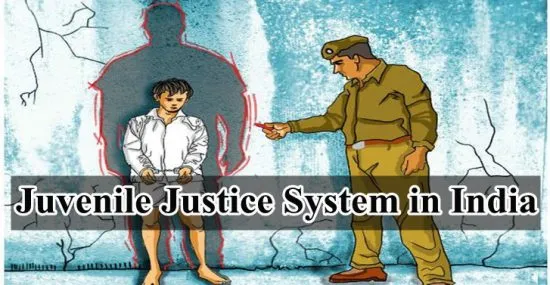
Under the Indian Penal Code, 1860 (IPC), the minimum age at which any person can be charged for a crime is seven years.  The total number of children arrested year wise has shown a trend of significant increase in number. The Children in the 16-18 years’ age group account for majority of children arrested. More than half of the children were arrested for offences such as theft, causing hurt, burglary, and riots.  

Under the 2015 Act offences committed by juveniles are categorised as heinous offences, serious offences, and petty offences.  Serious offences include offences with Three (3) to Seven (7) years of imprisonment.  The present Bill adds that serious offences will also include offences for which maximum punishment is imprisonment of more than seven years, and minimum punishment is not prescribed or is less than seven years.    

Serious offences: The Act provides that the Juvenile Justice Board will inquire about a child who is accused of a serious offence.  Serious offences are those for which the punishment is imprisonment between three to seven years.  The Bill adds that serious offences will also include offences for which maximum punishment is imprisonment of more than seven years, and minimum punishment is not prescribed or is less than seven years.


Designated Court: The Act has designated court for trying juvenile cases.

The Act, hitherto, provided that offences against children that are punishable with imprisonment of more than seven years, will be tried in the Children’s Court (equivalent to a Sessions Court).  Other offences (punishable with imprisonment of less than seven years) will be tried by a Judicial Magistrate.  The Bill amends this to provide that all offences under the Act will be tried in the Children’s Court.  

Offences against children:

The Act earlier provided that an offence under the Act, which is punishable with imprisonment between three to seven years will be cognizable (where arrest is allowed without warrant) and non-bailable.  The present Bill, however, now provides that such offences will be non-cognizable and non-bailable.

Child Welfare Committees (CWCs): 

The Act provides that states must constitute one or more CWCs for each district for dealing with children in need of care and protection.  It provides certain criteria for the appointment of members to CWC.  For instance, a member should be:

(i)          involved in health, education, or welfare of children for at least seven years, or

(ii)        a practicing professional with a degree in child psychology, psychiatry, law, or social work.

The Bill adds certain criteria for a person to be ineligible to be a member of the CWC.  These include: (i) having any record of violation of human rights or child rights, or (ii) being a part of the management of a child care institution in a district.

The Juvenile Justice (Care and Protection of Children) Act, 2015 states that adoption of a child is final once a civil court issues an adoption order. The Bill seeks to amend this to provide for the District Magistrate (including the Additional District Magistrate) to issue such adoption orders instead.  Any person aggrieved by such an adoption order may file an appeal with the Divisional Commissioner.  

Lack of judicial scrutiny in adoption orders

Under the Act, adoption of a child is final once a court issues an adoption order.  With this, the child becomes the lawful child of his adoptive parents with all the rights, privileges, and responsibilities that are given to a biological child.  The Bill shifts the power to issue adoption orders from the court to the district magistrate (including the additional district magistrate).  The question is whether it is appropriate for an administrative authority to issue adoption orders instead of a judicial body. 

The SOR of the Bill states that adoption cases are non-adversarial in nature and can be dealt as per the process laid out.  Adoption of a child is a legal process which creates a permanent legal relationship between the child and adoptive parents.  When deciding on adoption, courts review documents, ensure necessary procedures have been complied with, and conduct an inquiry of the child and adoptive parents.  This helps ensure that due consideration is given to the wishes of the child, and the adoption is for the welfare of the child.  It may be argued that determining whether the adoption is in the best interests of the child requires judicial training and competence.  

Further, the Bill provides that any person aggrieved by an adoption order, may file an appeal before the Divisional Commissioner.  Thus, it does not provide for judicial overview even at the appeal stage as well.  District Magistrates and Divisional Commissioners are trained to be administrators and perform functions of the government.  They may not have the competence to issue adoption orders or hear appeals related to them.  Vesting of such core judicial functions with them may also raise concerns of separation of powers between the executive and the judiciary.  

Note that, since the Juvenile Justice (Care and Protection of Children) Act, 2000 (replaced by the 2015 Act) came into force, the power to issue adoption orders has rested with the courts. There are several countries such as United Kingdom, Germany, France, and several states in the United States of America, where adoption orders are issued only by the court. 


                           REMARK

From the broad canvas of above discussion what may emerge is that the proposed amendments as per 2021 Bill which may be notified in due course raises many questions that it seeks to answer. The fact that the several offences against the Act is made non- cognizable could be construed as a step back in as much as involving Magistracy for direction to register F.I.R under the proposed amendment shall be cumbersome and adding to the woes of overburdened Magistracy. Moreover, delay is inbuilt in it and hence, the victim is likely to suffer. Apart from that, even if legal aid could be made available to a child or victim, the fact remains that time shall be consumed and the same may be wrangled into procedural complicacies. The issue of adoption, on the other hand is a legal act and trained judicial prowess in pith and substance shall be necessary. In this backdrop, according the power on District Magistrate and even the Appellate Authority being an Executive body in this regard may be counter- productive. The procedure that adoption entails and the law is quite elaborate in this regard and therefore judicial pondering over the issue is a must. The proposed amendments therefore seeks to relegate many issue from the 2015 Act and the same are not desirable and should be done away with.

                                           Anil K Khaware

                                           Founder & Senior Associate

                                           Societylawandjustice.com

Saturday, February 12, 2022

ARBITRATION AND CONCILIATION (AMENDMENT) ACT, 2021: IS IT NECESSARY?


ARBITRATION AND CONCILIATION (AMENDMENT) ACT, 2021: IS IT NECESSARY?


The Arbitration and Conciliation Act, 1996 (“Act”) in India has been a subject of periodical amendments with a view to cater to situation arising in the midst of implementation of law. The 1996 Act was a comprehensive legislation, enacted with a view to provide industry friendly ambience, close on the heels of economic liberalization. It was felt then that the country has to provide a wherewithal for a robust and effective rederessal mechanism, which should not be time consuming. The expeditious and effective legal redressal mechanism is perceived as essential for ease of doing business.  

Recently, the Act is sought to be revamped and Arbitration and Conciliation (Amendment) Act, 2021 (“2021 Amendment”) is in place. The 2021 Amendment has added the following text to Section 36(3) of the Act, after the proviso, which pertains to the enforcement of the arbitral award:

“Provided further that where the Court is satisfied that a prima facie case is made out that, — (a) the arbitration agreement or contract which is the basis of the award; or (b) the making of the award, was induced or effected by fraud or corruption, it shall stay the award unconditionally, pending disposal of the challenge to the award under Section 34 of A & C Act 1996.

Explanation – For the removal of doubts, it is hereby clarified that the above proviso shall apply to all court cases arising out of or in relation to arbitral proceedings, irrespective of whether the arbitral or court proceedings were commenced prior to or after the commencement of the Arbitration and Conciliation (Amendment) Act, 2015.

The aforesaid amendment and provision is the crux of the discussion. The 2021 Amendment, resurrects the power of the Indian Courts to grant an unconditional stay on the enforcement of an Arbitral Award, where the underlying Arbitration Agreement or contract or making of the Arbitral Award is induced by fraud or corruption. The amendment has elicited criticism, and disconcert within the arbitration community. This is, because, such power to grant an unconditional stay on the enforcement of an arbitral award existed prior to the Arbitration and Conciliation (Amendment) Act, 2015 (“2015 Amendment”), which resulted in an onslaught of challenges to delay the enforcement proceedings. This mischief was addressed by the 2015 Amendment, which scrapped the unconditional stay on the enforcement proceedings and instead empowered the courts to impose conditions on the stay of the enforcement proceedings so as to dissuade the prospective losing parties, from filing frivolous and unwarranted challenges. The 2021 Amendment, however, has done the reverse, and have undone the efforts of the 2015 Amendment to a certain extent and has revived the unconditional stay regime again. What is more perplexing is that the stay could be granted on vague grounds of fraud or corruption. Since the 2021 Amendment has now already been notified by the Central Government. Whether the amendment shall aid and facilitate India as a pro-arbitration jurisdiction and still if it accords a conducive environment for the businesses to operate in India is question that needs answer.

It is beyond doubt that addition of an Extra Layer of Judicial Scrutiny is envisaged. The first part of the 2021 Amendment seeks to address, inter alia, two situations: First, unconditional stay on the enforcement of the Arbitral Award if the “arbitration agreement or the contract, which is the basis of the award,” was induced or effected by fraud or corruption. Second, unconditional stay on the enforcement of the Arbitral Award, if the “making of the award by the Arbitral Tribunal” was induced by fraud or corruption. Interestingly, it is observed that such situations have already been envisioned and adequately addressed by the existing provisions of the Act.

The hon’ble Supreme Court has already held in ONGC Vs Saw Pipes Ltd AIR 2003 SC 2629 that award against public policy may not stand judicial scrutiny.

The Law Commission of India in the 246th Report  had sought to curb the wide interpretation of ‘public policy’  in ONGC Case (Supra) so as to insulate arbitral award from needless objections. In that backdrop,  parliament had amended the Act effective from 23rd of October 2015. Therefore, sub-sec(2A) in Section 34 of the Act provided patent illegality will be one of the grounds of violating public policy only in cases of domestic arbitral awards. The proviso added makes it more clear stating that this ground cannot be invoked in case of erroneous application of law or by re-appreciation of the evidence.


Fraud or corruption in the arbitration agreement or contract:

If the parties intend to plead and prove the allegations of fraud or corruption pertaining to the arbitration agreement or the contract, the appropriate forum to raise such contentions is the Arbitral Tribunal per se or at the stage of reference. The Arbitral Tribunal is competent to determine the issues of fraud alleged by the parties. The Arbitral Tribunal is competent to evaluate comprehensive and voluminous evidence and conduct an in-depth scrutiny to determine whether the Arbitration Agreement or the contract is vitiated by fraud or corruption. If the parties are not satisfied with the Arbitral Tribunal’s findings or if the Arbitral Tribunal does not consider the allegations of fraud even after parties have raised it, the parties have an option to take recourse to the filing of an application for the setting aside of the award under Section 34 of the Act and even if the parties are still not content with the decision of the Section 34 application, parties could prefer appeal against the order of the Section 34 application under Section 37(1)(c) of the Act.

Fraud or corruption at the time of making of award:

Section 34(2)(b) [Explanation 1](i) explicitly provides an opportunity to the parties to seek setting aside the award, if the making of the award by the Arbitral Tribunal was induced by fraud or corruption under the ambit of the award being against the public policy of India. If the parties are not satisfied with the setting aside proceedings, the same is appealable under Section 37(1)(c) of the Act. The 2021 Amendment does not seem to provide any justifiable additional ground or relief that an aggrieved party may resort to, should they face a situation of fraud as envisioned by the 2021 Amendment. The enactment of the 2021 Amendment is merely akin to instituting an additional level of judicial scrutiny in the form of an extra layer of appellate review, that too in the form of an interim measure without any adequate safeguards. The consequences of this additional scope of interference could be catastrophic.


Disregarding minimal judicial intervention:

The A & C Act 1996 was enacted to secure the object of minimum judicial interference and relative ease in the judicial rederesal mechanism that was envisaged under it. However, 2021 Amendment could lead to an increase in the excessive judicial interference in an arbitration proceeding which is antithetical to the very purpose of opting for arbitration as a method of dispute resolution, i.e., minimal judicial intervention as enshrined under Section 5 of the Act to avoid the ordeals of a traditional litigation process. Moreover, it will put an immense strain on already overburdened courts and the pendency of cases in India. This will most likely add to the delay in enforcing the arbitral awards in India.


Tool for harassment:

If seen from another yardstick, the 2021 Amendment may become a potent tool for the losing parties to harass the opponents by pleading fraud or corruption in every arbitration proceeding so as to procrastinate the enforcement of the Arbitral Award, just as most applications under Section 34 of the Act allege a violation of public policy. This may not only add to the costs, inconvenience, and delay of the dispute resolution process but may also end up increasing the misery of the innocent parties. This may discourage the parties to opt for arbitration as a dispute resolution mechanism, as the parties will eventually have to subject itself to the ordeals of the delayed court proceedings to seek relief. The moot point therefore is whether the 2021 amendment is incentivizing the delinquent? The check and balance is already part of the Act in as much as Section 34 of the 1996 Act is otherwise self contained. The robust dispute resolution mechanism is always perceived as the need and the same had been well entrenched in the act even before the current amendment and therefore the moot question is that whether the amendment was at all necessary in the aforesaid context.   

Prospective Uncertainty

The 2021 Amendment seems to be marred with several inconsistencies, ambiguities, and uncertainty in its application, giving rise to certain undesirable consequences. As stated, the additional ground at the stage of enforcement is accorded to an aggrieved party and the latter may plead fraud or corruption at the time of the enforcement proceedings, even when the parties did not plead fraud or corruption before the Arbitral Tribunal. This potentially means that a party can get an unconditional stay on the enforcement of an award on a ground which that party might not even have invoked at any time, before, the application for setting aside of the award.

Lack of criteria:

What is ironical is that the 2021 Amendment does not stipulate any standard or criterion on which fraud or corruption is to be assessed, unlike the standards laid down under Section 34 of the Act, which mandates a party to “establish on the basis of the record of the Arbitral Tribunal” should the parties seek to invoke the grounds under Section 34 for the setting aside of the Arbitral Award. In the absence of a clear prescribed standard, there is ambiguity, uncertainty, and vagueness in invoking and justifying the grounds under Section 36 of the Act introduced by the 2021 Amendment. In effect it may unwittingly dissuade a business entity from subjecting themselves to a dispute resolution mechanism owing to uncertainty. Moreover, the 2021 Amendment presents no clarity with respect to parties adducing additional evidence beyond the Tribunal’s record to plead and prove the allegations of fraud or corruption, especially at the enforcement stage. If a party is allowed to adduce additional evidence at the stage of filing an application for stay of the award, effectively, the Act will then ingrain two-time scrutiny of an Arbitral Award with similar grounds, but different standards and at different stages. The predicament in this context could be galore, as, while, under a Section 34 of the Act, challenge by a party may only relate to the record of the Tribunal, but. now, under a Section 36(2) proceeding, a party can adduce additional evidence. This will create an unwarranted hierarchy and may lead to complexity of the process resulting into prolonging the enforcement of the award.

Now, if we take a situation that if the court does not allow the parties to adduce additional evidence and restricts their pleading to the record of the Arbitral Tribunal, there may be two implications.  It may in the context be practically difficult for the courts to form a prima facie view and satisfy itself that the Arbitration Agreement or the contract which is the basis of the award, or the making of the award itself are induced by fraud or corruption, unless the courts examine the dispute on merits which, if taken recourse to, is antithetical to the intent and purpose of Section 34 and Section 36 of the Act. Secondly, it will be challenging to plead and prove fraud or corruption without adducing any additional document or evidence, especially if the plea is being taken for the first time at the enforcement stage due to its inherent nature and wide ambit. What may further add to the dilemma in as much as there may not be any fundamental difference between a Section 34 proceeding and a Section 36 proceeding and this may eventually lead to multiplicity of proceedings.


Risk to arbitrator’s reputation:

There is also a risk of tainting the Arbitrator’s reputation if the courts are in a rush to grant an unconditional stay merely on a prima facie view that the making of the award was induced by fraud or corruption. In practice, it may have significant implications on the functioning of the Arbitrators and issues of Arbitrator immunity if they are under constant pressure that their award is going to get unconditionally stayed on the grounds of fraud or corruption without comprehensive scrutiny by the courts.

Retrospective Applicability?

The second part of the 2021 Amendment, which mentions the explanation to the additional proviso, pertains to the retrospective applicability of the 2021 Amendment. In essence, it gives a free license to the parties to make an application under Section 36(2) of the Act and invoke the grounds of fraud or corruption envisaged under the additional proviso to Section 36(3) of the Act in “all court cases arising out of or in relation to arbitral proceedings, irrespective of whether the arbitral or court proceedings were commenced prior to or after the commencement of the Arbitration and Conciliation (Amendment) Act, 2015”. This could potentially give rise to multiple scenarios over lack of procedural clarity. First, the parties may invoke the fresh grounds of fraud and seek unconditional stay under the 2021 Amendment, by way of an amendment application, in the pending applications of Section 36(2) of the Act where the plea of fraud was not initially taken. Second, the parties may move an application to withdraw their pending Section 36(2) application with leave to file a fresh Section 36(2) application that may possibly give the parties an opportunity to incorporate the grounds of fraud and make use of the 2021 Amendment. Third, the parties may also look to file a fresh Section 36(2) application with a fresh cause of action in a pending arbitration proceeding where another Section 36(2) application has already been disposed of, to take another shot at delaying the enforcement of the arbitral award. The scenarios mentioned above are not exhaustive, and the parties may find a novel way to seek recourse to the 2021 Amendment, though, that may not really be necessary. This may lead to a flurry of Section 36(2) applications in the absence of safeguards for eliminating false, vexatious, and frivolous enforcement applications for an unconditional stay.

Of course, a lot will depend on how courts will interpret the explanation to the additional proviso and how much leeway the Courts are going to give to the parties to introduce the pleas of fraud and corruption empowered by the 2021 Amendment in the above-mentioned scenarios. Moreover, what uniform standards various Commercial Courts, High Courts and the Supreme Court are going to establish will be crucial since there will always be a risk of conflicting standards and jurisprudence, which may lead to a catastrophic result of opening floodgates of litigation, thereby breaking down the very soul of an arbitration proceeding, i.e., effective, speedy, user friendly, and cost-effective dispute resolution. Interestingly, the arbitration statutes of the pro-arbitration jurisdictions such as Singapore, Hong Kong, or England or even the UNCITRAL Model Law on International Commercial Arbitration do not offer any provisions for unconditional stay of the domestic arbitral award at the stage of enforcement.

In fact, the Indian jurisprudence also emphasises the fact that there is no scope for an unconditional stay on the enforcement of an arbitral award under the Act and that any such unconditional stay can thwart the execution of the arbitral awards for many years, thereby defeating the purpose and effectiveness of the arbitration proceedings.

Conclusion

The A7 C Act 1996 was amended in 2015 with a view to redress the problems of high costs and long timeframes that dispute resolution entailed. Through this amendment of 2015, the provision of an automatic stay of an arbitral award under Section 36 of the act was taken away, in case of admission of a Section 34 application. The 2021 Amendment of Section 36 stipulates an automatic stay on an arbitral award if the court is satisfied that there is a prima facie case for fraud or corruption in the relevant Arbitration Agreement, contract or making of the award. This is a step back from the 2015 amendment as it brings back automatic stay, though with the caveat, as stated.

While the ailments that the 2021 Amendment is attempting to cure is unclear and ambiguous. The side effects of the 2021 Amendment appears to be comprehensive. The provision of judicial intervention in execution /enforcement through stipulated unconditional stay may lead to the multiplicity of proceedings. This may encourage some frivolous challenges. Apart from that the prescription of arbitrator’s liability coupled with the dilution of the 2015 Amendment and failure in upholding the basic principles of minimum judicial intervention by virtue of the 2021 Amendment may not augur well with India’s objective of becoming a pro-arbitration hub. We know that already road blocks are felt while seeking the enforcement of a judgment or an award, still, the amendment shall lead to a sudden shift from Indian courts’ pro-enforcement approach. The empowering of the courts to grant an unconditional stay on the enforcement of an arbitral award is therefore detrimental to the vested right of enforcement, finality, and binding nature of an arbitral award. The safeguards to the aggrieved parties already existed in A & C Act 1996 and also through 2015 Amendment Act and the 2021 amendment should have been avoided. 

Anil K Khaware

Founder & Senior Associate

Societylawandjustice.com                                                     ----


Sunday, January 30, 2022

MSME ACT: OBJECT & IMPACT


MSME ACT: OBJECT & IMPACT


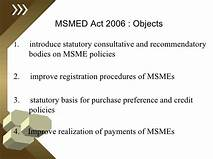
Micro, Small and Medium Enterprises Development Act, 2006 (In short “MSME Act”) was enacted with the object of facilitating the promotion, development and enhancing the competitiveness of small and medium enterprises. The Act inter alia define “small enterprise” and medium enterprise and provides for establishment of a National Small and Medium Enterprises Board, besides, it provide for classification of small and medium enterprises on the basis of investment in plant and machinery or equipment or establishment of Advisory Committee. What is of pertinence is that the MSME Act encapsulates provisions for ensuring timely and smooth flow of credit to small and medium enterprises to minimize the incidence of sickness in accordance with the Guidelines of Reserve Bank of India (RBI). The MSME Act has faced impediments in its way, and the object sought to be achieved has been achieved, but only partially. 


THE PROVISIONS

Chapter V of the said MSME Act (sections 15 to 24) contains provisions to address the issue of delayed payment to Micro and Small Enterprises. Section 15 of the Act mandates that where any supplier supplies any goods or renders any services to any buyer, the buyer would make the payment for the same on or before the date agreed, which in any case could not exceed 45 days from the date of acceptance/deemed acceptance. Section 16 of the Act provides for payment of interest. Section 17 of the Act mandates that the buyer would be liable to pay the amount for the goods supplied or services rendered along with interest as provided under Section 16 of the Act. 10.

Section 18(1) of the Act contains a non obstante clause and enables any party to a dispute to make a reference to the Micro and Small Enterprises Facilitation Council (MSEFC).

If one examines the scheme of the provision of Section 15 to 23 of the Act, it is apparent that the scheme is to provide a statutory framework for Micro and Small Enterprises to expeditiously recover the amounts due for supplies made by them. This is in conformity with the object of the Act to minimize the incidence of sickness in Small and Medium Enterprises and to enhance their competitiveness. It is understood that the Small and Medium Enterprises do not command a significant bargaining power and to thus it is indicated in the statement of object and reasons of the Act - the object of the Act is, inter alia, to extend the policy support and provide appropriate legal framework for the sector to facilitate its growth and development.


ARBITRATION AS PER MSME ACT

It is, apparently, for this reason that Section 18 (3) does not contemplate an Arbitration to be conducted by an Arbitrator which is to be appointed by either party, but expressly provides that the same would be conducted by MSEFC or by any institution or a centre providing alternate dispute resolution services.

Section 19 of the Act also ensures a more expedient recovery by making pre-deposit of 75% of the awarded amount, a pre condition for assailing the award. It is necessary to point out that the benefit of this provision is also available in case of arbitrations in terms of agreements between the parties (and not by a statutory reference under Section 18 (3) of the Act). As per the law evolved and shall be discussed subsequently. It is so, as the MSME Act overrides the other law for the time being in force. Section 24 may be perused in this regard: 

Section 24 of MSME Act has Overriding effect-

24. The provision of sections 15 to 23 shall have effect notwithstanding anything inconsistent therewith contained in any other law for the time being in force.”

 A plain reading of Section 18(2) of the Act indicates that on receipt of a reference under Section 18(1) of the Act, the Council [MSEFC] would either conduct conciliation in the matter or seek assistance of any institution or centre providing alternate dispute resolution services. It also expressly provides that Section 65 to 81 of the Arbitration & Conciliation Act (A& C) 1996 Act, would apply to such a dispute as it applies to conciliation initiated under the Part III of the A&C Act. It is clear from the provisions of Section 18 (2) of the Act that the legislative intention is to incorporate by reference the provisions of Section 65 to 81 of the A&C Act to the conciliation proceedings conducted by MSEFC.

Section 18 (3) of the Act expressly provides that in the event the conciliation initiated under Section 18 (2) of the Act does not fructify into any settlement, MSEFC would take up the disputes or refer the same to any institution or centre providing alternate dispute resolution services for such arbitration.


                                     LAW: AS EVOLVED

PIYA BAJWA  Vs  MICRO AND SMALL ENTERPRISES FACILITION CENTRE AND ANR. W.P.(C) 1134/2021 & CMAPPL. 3201/2021


The hon’ble Delhi high court in the above case had occasion to deal with the following communication issued by the Micro and Small Enterprises Facilitation Council (MSEFC) by which the Petitioner was called to participate in the conciliation process and also file a reply.  The impugned communication issued by the Facilitation Council dated 31st  December, 2020 reads as under:

“The MSEF Council, Delhi is in receipt of a reference filed u/s 18(1) of the MSMED Act, 2006 by the Claimant M/s Sharp Travels (India) Ltd., Application/Temp No. DL08E0001555/S/00122 against the outstanding dues of Rs. 308307 which is to be paid by you to the Claimant. I am directed to inform you that the MSEF Council, Delhi has decided that the conciliation process should be taken up first before release of outstanding dues to the Claimant, failing which a Notice to personally appear before the Council will be served to you for taking further necessary action in the matter. Further, I am to inform you that as per Section 16 of the MSMED Act, 2006 the Respondent will be liable to pay the compound interest with monthly rests to the supplier on that amount from the appointed day or, as the case may be, from the date immediately following the date agreed upon, at three times of the bank rate notified by the Reserve Bank. It is therefore requested to file the reply of outcome of the conciliation process held between both of you within 30 days.”

The petitioner in the writ petition had assailed that and pointed out that the words “decided that” clearly implied that Facilitation Council has taken a decision in the matter that the Petitioner ought to release the outstanding dues, whereas the  claim is time barred and thus, such a decision could not have been taken without hearing the Petitioner. As the claim itself was not maintainable, therefore, proceeding further was uncalled for. Per contra, it was the contention of respondent that the mere fact that the Facilitation Council has called the parties for exploring conciliation in terms of Sections 18(1) and 18(2) of the Micro, Small and Medium Enterprises Development Act, 2006 does not imply that any decision was taken. In case, the conciliation process fails then the remedies of the Petitioners are available in terms of Sections 18(3) and (4) of the MSME Act. The conciliation process is meant to resolve the disputes between the parties in an amicable manner. The petitioner therefore cannot be forced  to enter into a settlement with Respondent .


ARBITRATION ACT AND MSME ACT: IS THERE OVERLAP?


The scheme of the MSME Act has been discussed in detail in the judgment of a ld. Single Judge of hon’ble Delhi High Court in BHEL vs. The Micro and Small Enterprises Facilitation Centre & Anr., [W.P.(C) 10886/2016, decided on 18th September, 2017]. The Court observed therein as under:


 A plain reading of Section 18(2) of the Act indicates that on receipt of a reference under Section 18(1) of the Act, the Council [MSEFC] would either conduct conciliation in the matter or seek assistance of any institution or centre providing alternate dispute resolution services. It also expressly provides that Section 65 to 81 of the A&C Act would apply to such a dispute as it applies to conciliation initiated under the Part III of the A&C Act.

It is clear from the provisions of Section 18(2 of the Act that the legislative intention is to incorporate by reference the provisions of Section 65 to 81 of the A&C Act to the conciliation proceedings conducted by MSEFC.  Section 18(3) of the Act expressly provides that in the event the conciliation initiated under Section 18(2) of the Act does not fructify into any settlement, MSEFC would take up the disputes or refer the same to any institution or centre providing alternate dispute resolution services for such arbitration.

In paragraph 17, it is held that

“It is at once clear that the provision of Section 18(3) of the Act do not leave any scope for a non institutional arbitration. In terms of Section 18(3) of the Act, it is necessary that the arbitration be conducted under aegis of an institution-either by MSEFC or under the aegis of any “Institution or Centre providing alternate dispute resolution services for such arbitration”.”


Interestingly, the Bombay High Court in the case of M/s Steel Authority of India v. The Micro, Small Enterprise Facilitation Council and Anr. : AIR 2012 Bom 178 held in paragraph 11 of the said judgment, that “we find that there is no provision in the Act, which negates or renders the arbitration agreement entered between the parties ineffective”.

The Punjab and Haryana High Court in The Chief Administrative, COFMOW (supra) had rejected the contention that provisions of Section 18 (3) of the Act for referring the disputes to arbitration would apply only where there was no arbitration agreement between the parties.

However, Punjab & Haryana High Court in Welspun Corp. Ltd v. The Micro and Small, Medium Enterprises Facilitation Council, Punjab and others :CWP No. 23016/2011 decided on 13.12.2011, had taken a view contrary to that of the Bombay High Court. Similarly, the decision of the Madras High Court in M/s Refex Energy Limited v. Union of India and Another : AIR 2016 Mad139 was also on the line of welspun (Supra)

The judgment rendered by Allahabad High Court in BHEL v. State of U.P. and Others : W.P. (C) 11535/2014 decided on 24.02.2014;  the decision of the Calcutta High Court in NPCC Limited and another v. West Bengal State MSEFC & Ors.: GA No. 304/2017 W.P. 294/2016 decided on 16.02.2017; and the decision of Delhi High Court in GE T & D India Ltd. v. Reliable Engineering Projects and Marketing : OMP (Comm.) No. 76/2016 decided on 15.02.2017, are on similar line and contrary to Bombay High Court.

The Calcutta High Court in the case of National projects Construction Corporation Limited (supra) had also concluded that in cases where an arbitration agreement existed between two parties and one such party was an entity within the meaning of the Act, the Council established under the Act would have jurisdiction to arbitrate the disputes between such parties. The Court further observed as under:-

“When there exists an arbitration agreement between two parties and one of such parties to the arbitration agreement is an entity within the meaning of the Act of 2006, the Council established under the provisions of the Act of 2006 or any institution or centre identified by it has the jurisdiction to arbitrate such disputes on a request being received by such Council for such purpose”.


The Supreme Court in National Seeds Corporation Ltd v. M. Madhusudhan Reddy & Anr. : (2012) 2 SCC 506 has held that the MSME Act  being a Special Act would override the provisions of Arbitration and Conciliation Act, 1996 (hereafter the 'A&C Act').

It is thus clear through catena of judicial precedents that even when there may be arbitration agreement between the parties, but in view of non obstante clause in MSME Act and the fact that the MSME Act is a special enactment, the provision of MSME Act shall prevail and the arbitration, if allowed to comm3ence upon failure of amicable settlement, the same shall be under the aegis of MSME Act only.


OVEREMPHASIS ON THE WORD SUPPLIER

The MSME Act however overemphasize “supplier” and “buyer” and buyer is perceived to be liable, though section 18 somewhat clears the air, in as much as it is specified that “any party to a dispute” with regard to any amount due may make a reference for a sum due u/s 17 of the MSME Act before the Micro and Small Enterprises Facilitation Council (MSEFC). The classification of “supplier” and “buyer” category is inadequate in as much as there may be several instance where the buyer may be in receiving ends from a supplier, which may be a big establishment and may dictate their terms and thus overemphasis on buyer being liable to supplier is something which deserve a relook. Similarly, the issue of jurisdiction or exclusive jurisdiction is somewhat ambiguous under the MSME Act in as much as, whereas the situs of jurisdiction shall be the location of “supplier”  but in similar vein it is also written and buyer all over the country. It is though vague, whether buyer shall be entitled to raise a claim in their location itself or not? The section 18(4) may be perused in this regard:

(4) Notwithstanding anything contained in any other law for the time being in force, the Micro and Small Enterprises Facilitation Council or the centre providing alternate dispute resolution services shall have jurisdiction to act as an Arbitrator or Conciliator under this Section in a dispute between the supplier located within its jurisdiction and a buyer located anywhere in India.

The ambiguity, therefore crave for rectification. 

REMARK

The MSME Act and MSEFC constituted under it has travelled some distance and provisions are made in the Act not only to promote MSME organization, but some leverage is accorded to them for seeking speedy redressal of their grievance, still, the gaping holes in the Act need to be plugged and some more teeth may be given to the MSEFC under the MSME Act. Besides, overemphasis on “supplier” and “buyer” and showing buyer as liable is incomplete depiction or assumptive of a situation. There may be instance, where buyers could be in receiving end, though, what is inherent in the Act is that buyer shall be liable and otherwise also liability upon buyer is fastened in terms of the Act. This is oversimplification and the aggrieved party needs to be clearly defined and that could be buyer or supplier or any other entity. The issue of jurisdiction , particularly, the territorial jurisdiction as per the Section 18(4) of the MSME Act need to be clearly specified to make it more explicit and to undo the vagueness..


Anil K Khaware

Founder & Senior Associate

Societylawandjustice.com 


 SUPREME COURT ON UNFETTERD COPARCENARY RIGHTS OF DAUGHTERS

  SUPREME COURT ON UNFETTERED COPARCENARY RIGHTS OF WOMEN The daughter has equal rights on the ancestral property The Hindu Succession (...